
- …
- Yak
- Quests
- Washington 100 Highest
- Saska Peak
8,402 ft · Cascade Range, Washington
Saska Peak
Saska Peak is an 8,402 ft peak in the Cascade Range, Washington. The standard route is the South Route: 19 mi, 4,500 ft of gain, Class 3.
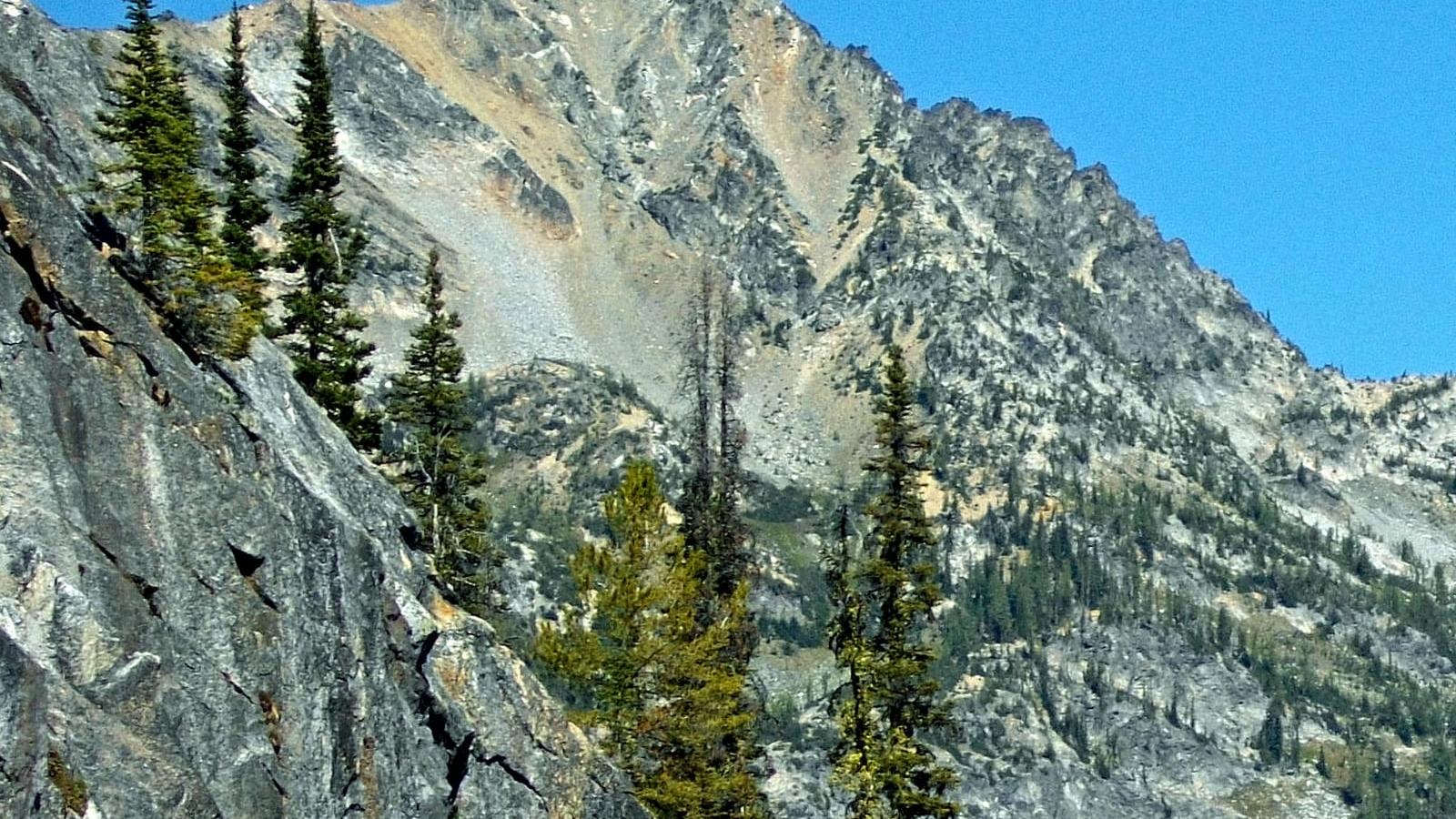
Saska Peak at a glance
- Elevation8,402 ft2,560 m
- RouteSouth RouteClass 3
- Distance19 mi4,500 ft gain
- Time2 – 3 daysHard effort
- SeasonJul – Oct
- RangeCascade RangeWashington
Climbing the South Route
From Entiat on US 97A, drive the Entiat River Road about 32 miles and North Fork Road 5606 to its end. A Northwest Forest Pass is required to park. Hike North Fork Entiat Trail 1437 to the Pyramid Mountain Trail and the meadow camp southeast of the peak. Follow the trail around the south shoulder toward Saska Pass, leave it at a small rib, and climb the south slopes through minor rock bands, Class 2 to 3. Do not descend the east face toward Emerald, since it cliffs out. Some gullies are loose. Fill out the free wilderness permit. The Little Giant Fire closure shuts this road and trail through April 2027.
Gear and hazards
What to bring
 Backpack (55–75 L)
 Hiking Boots
 Water
 Offline Maps
 Headlamp
 Satellite Communicator
 Whistle
 Sunglasses
 Sunscreen
 Sun Hat
 Midlayer
 Insulated Jacket
 Hardshell Jacket
 Warm Hat
 Buff
 Midweight Gloves
 Trekking Poles
 GPS Device
 Power Bank
 Water Filter
 First-Aid Kit
 Emergency Bivy
 Helmet
What to watch for
- Loose rock
- Rockfall
- Steep exposure
- Remote location
Quests with Saska Peak
 Washington 100 Highest
Frequently asked questions
How tall is Saska Peak?
Saska Peak is 8,402 feet (2,560 m) tall. It is in the Cascade Range, Washington.
How hard is it to climb Saska Peak?
The South Route is Class 3, which means scrambling, where you use your hands to climb and a fall could be serious. Yak rates the overall effort hard: 19 miles with 4,500 feet of elevation gain.
How many days does it take to climb Saska Peak?
Most climbers plan 2 – 3 days for the South Route, with at least one night on the mountain.
Is Saska Peak dangerous to climb?
It has real risks: exposed sections where a fall would be serious and rockfall from loose rock. Go with an experienced partner, wear a helmet, test holds before you trust them and turn back if the rock is wet or icy.
Do you need a helmet for Saska Peak?
It is a good idea. Loose rock and rockfall are common on the South Route, so a helmet is on the gear list.
When is the best time to climb Saska Peak?
The usual climbing window is July to October. Outside it, expect snow, storms or closed access, and check the summit forecast before you go.
Climb Saska Peak with Yak
Plan your route on a topo map, check the summit forecast, then log your climb and see what is left on your list