Munro bagging: how to track the Munros and register a compleation
There are 282 Munros, Scottish mountains of 3,000 feet or more, and finishing them all is called a compleation. Here's where the list came from, how to register your round, and what to check before each hill
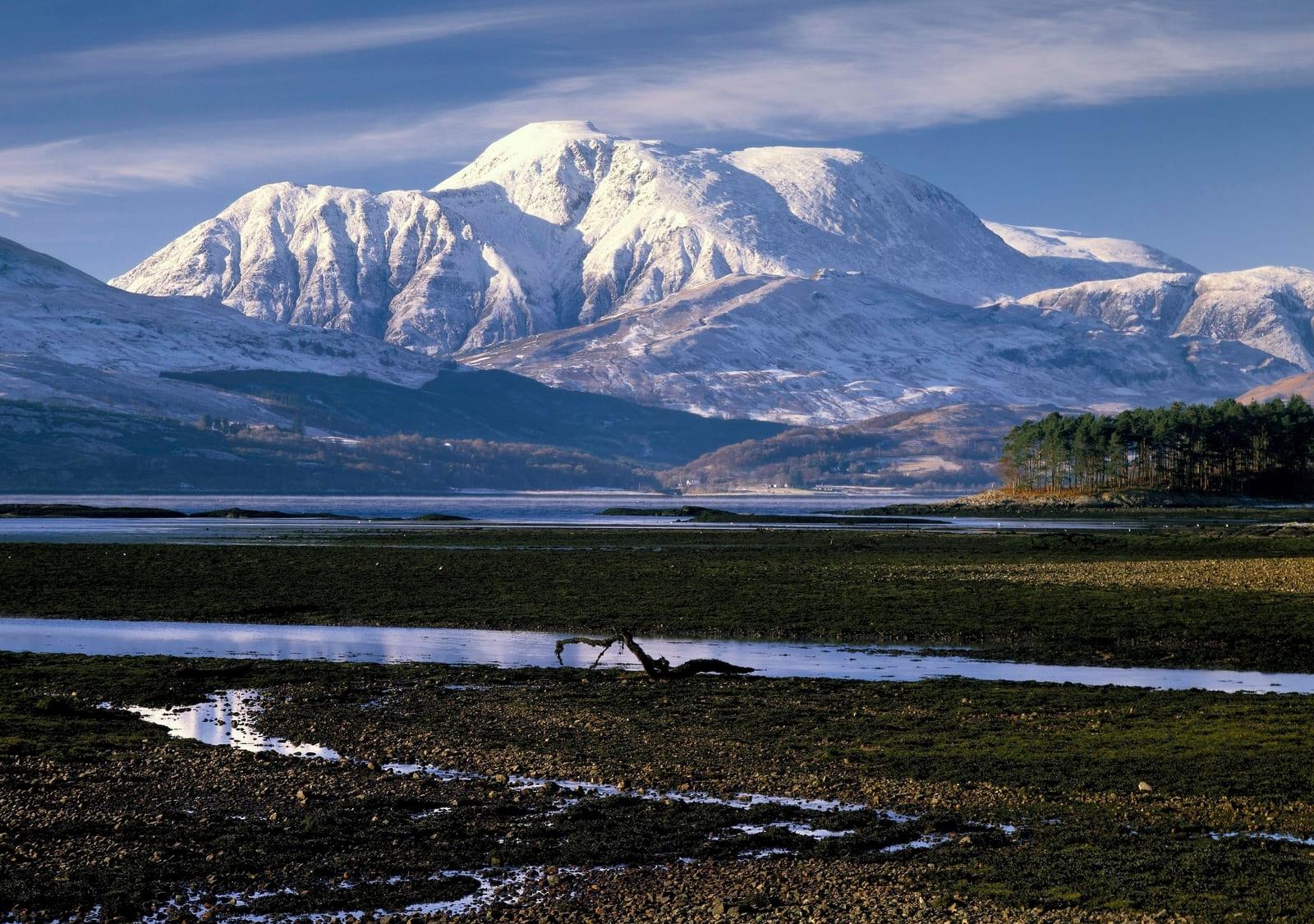
Munro bagging is climbing Scotland's Munros, the 282 mountains of 3,000 feet (914 m) or more listed in Munro's Tables, and ticking them off one by one. Finishing all 282 is called a compleation, and you register it with the Clerk of the List at the Scottish Mountaineering Club (SMC), who gives you a number on the official list of Munroists.
The list is 135 years old. Sir Hugh Munro published the first version in the SMC Journal in 1891, and the first person to climb every hill on it finished in 1901. More than 8,400 people are now on the SMC's online list of Munroists, and the SMC logged 292 new Munro registrations in 2025 alone.
- Munros282
- Height3,000 ft (914 m) or more
- Munro Tops226
- First list1891, SMC Journal
- First round1901
- Kept byScottish Mountaineering Club
How many Munros are there?
There are 282 Munros, according to the SMC's hill lists, which keep the official version. A Munro is a distinct Scottish peak of 3,000 feet or more with "sufficient separation" from its neighbors.
That last phrase has never been pinned down. Munro didn't write a precise definition, and the SMC says the character of a mountain played a part in his choices.
The SMC also keeps a list of 226 Munro Tops: summits over 3,000 feet that don't stand far enough apart to count as mountains in their own right. A Top is usually a bump on the ridge of a bigger Munro. Climbing every Top is a separate goal, and plenty of people who've finished the Munros go back for them.
Why does the number of Munros keep changing?
Because the list has been revised many times since 1891, mostly as maps got better. Munro's first table listed 283 separate mountains and 538 tops in total, according to The Munro Society. He treated it as a first attempt and kept correcting it until his death in 1919.
A second edition in 1921 took in his changes and listed 276 Munros. The 1974 edition had 279, and further revisions followed in 1981, 1984, 1990 and 1997. These days the SMC only changes the list to match topographic data adopted by the Ordnance Survey, and it records each change as hill news.
If a hill is promoted or demoted partway through your round, the Munro Society's rule for membership is a helpful guide: what counts is the list in Munro's Tables at the time of your compleation.
Who was the first person to climb all the Munros?
The Rev. A. E. Robertson, in 1901. He's number 1 on the SMC's list of compleators, and it was 22 years before anyone joined him.
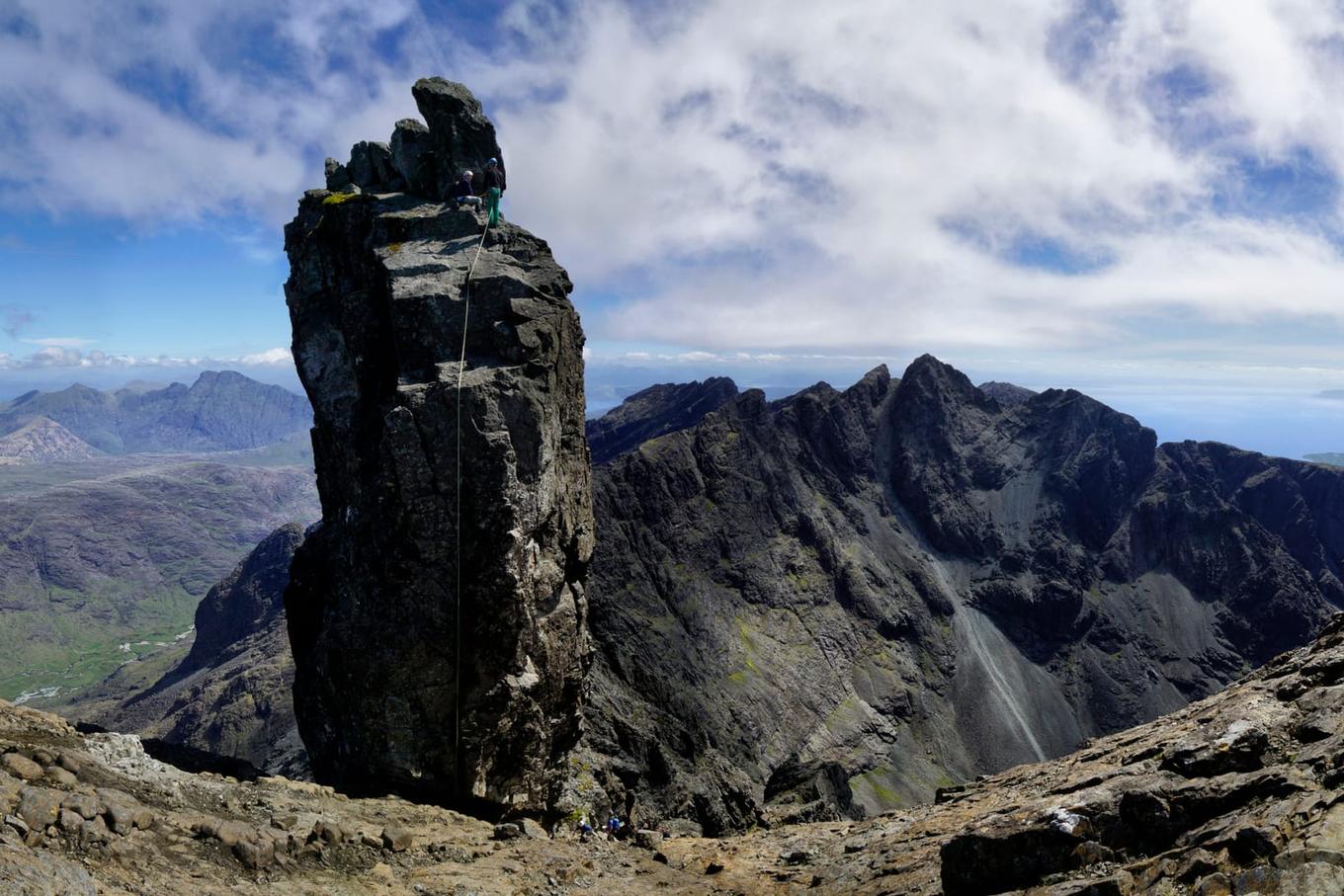
Munro himself never finished. His first recorded 3,000-foot peak was Ben Lawers, in May 1879, and he was one of the founders of the SMC ten years later. When he died, three summits were still left: Carn an Fhidhleir in Glen Feshie, the Inaccessible Pinnacle on Skye, and Carn Cloich-mhuilinn in upper Deeside. That last one has since been demoted to a Top, so the hill he was probably saving for his final Munro isn't a Munro anymore.
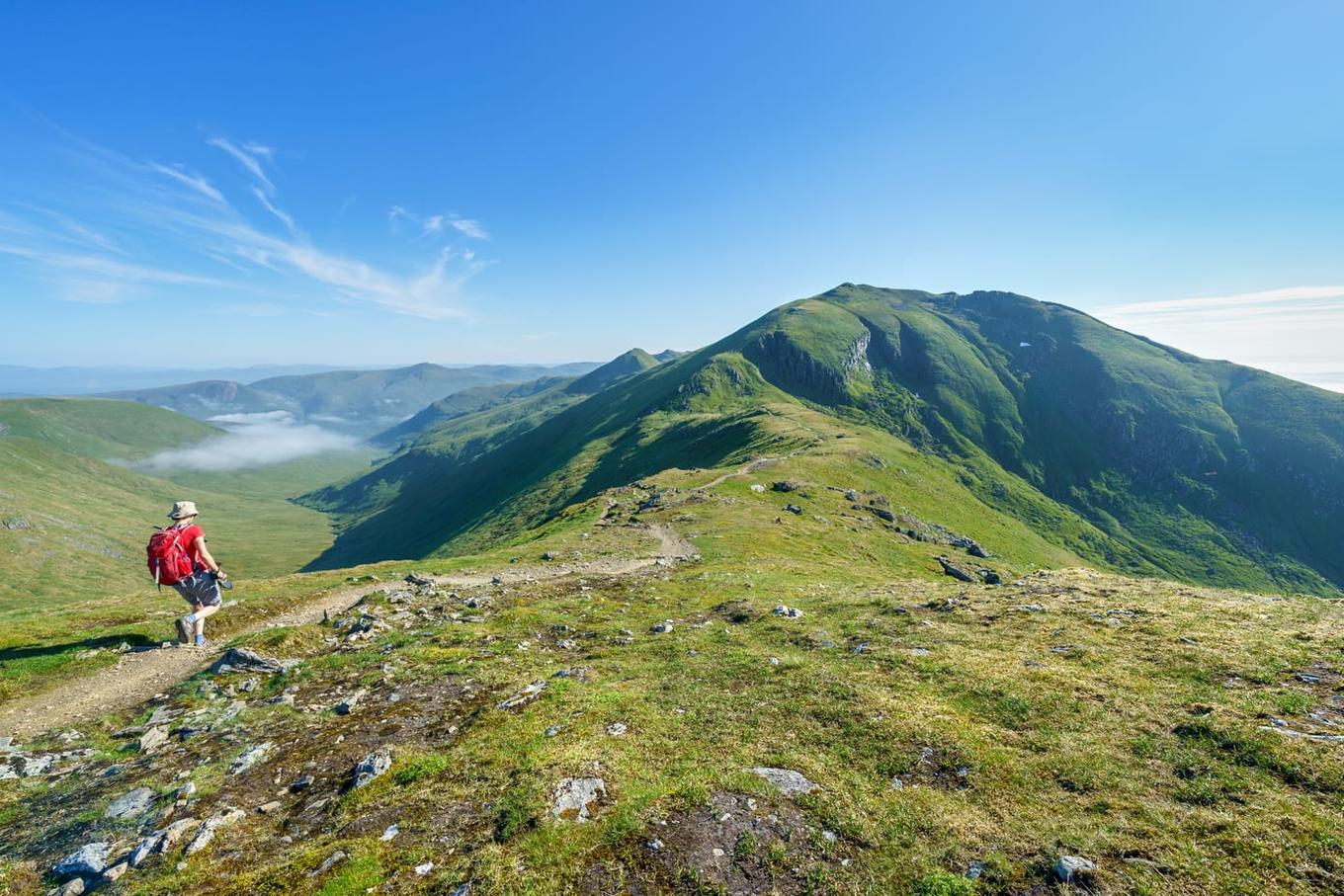
The next few names on the list are a short history of Scottish hillwalking. The Rev. A. R. G. Burn (number 2) finished the Munros and the Tops in 1923. J. A. Parker (3) finished the Munros in 1927 and, in 1929, was the first to climb the Furths, the 3,000-foot mountains elsewhere in Britain and Ireland. John Rooke Corbett (4), whose name went on to the list of 2,500-foot hills, finished the Munros and Tops in 1930. In 1947 J. Hirst and Mrs. J. Hirst became the first couple to compleat, and Mrs. Hirst the first woman.
Why is it spelled compleation?
It's a deliberate old spelling. The SMC's Munro FAQs explain that "compleat" is an archaic form of complete, borrowed from Izaak Walton's The Compleat Angler, first published in 1653. The Clerk of the List has used it for years, and someone who has finished is a compleator.
How do you register a Munro compleation?
Use the SMC's online form, on its Log a Compleation page. The SMC prefers it because it cuts down on errors, and you can add a photo of yourself on your final hill when you submit. The same form handles later rounds and other hill lists, like the Corbetts.
If you'd rather write, the SMC still takes letters by post (not email) to the Clerk of the List, at the address on its Compleators page. The Clerk likes to hear how long your round took, your first and last hills, your age, where you're from and what you plan to do next. Include a stamped addressed envelope for the reply, and make it A4 if you'd like a certificate.
A few things to know before you send it:
- It's public. Your name, the year you compleated and any photo and caption go on the SMC website.
- It's archived. Your letter or submission can be quoted in Munro Matters, the annual report on compleations in the SMC Journal, and it's added to the SMC archive at the National Library of Scotland.
- You get a number. The Clerk aims to reply within two weeks, longer at busy times, and suggests getting in touch again if you've heard nothing after a month.
- There's regalia. Registered Munroists can buy a Munroist tie, brooch or snood from the SMC's Keeper of Regalia, with a design approved by the Court of the Lord Lyon and based on Munro's coat of arms.
Registering is optional, and some people never do. Either way, it helps to keep a record as you go. Plenty of apps can hold that, from Walkhighlands to Hill Bagging, and we've compared them in the best peak bagging apps.
What is the Munro Society?
It's a club for people who have finished the Munros, founded in 2002. Membership is open to anyone who has climbed every Munro in the Tables at the time of their compleation, whether or not they registered with the Clerk, according to The Munro Society.
Members, and usually their dogs if they come along, can go to regular meets in Scotland. There's also an annual dinner with a speaker and a photo competition, and a newsletter. It also runs Mountain Reporting, where members record the changes they notice on the hills over the years.
What are the Corbetts, Grahams and Donalds?
They're the next Scottish hill lists down, and the SMC records compleations of each:
- Corbetts: 222 hills from 2,500 to just under 3,000 feet, each with a drop of at least 500 feet on all sides.
- Grahams: hills from 600 m to just under 2,500 feet, with a drop of at least 150 m. A 2022 change to the definition added 12 new Grahams; the SMC still records the 219 Grahams of 2,000 feet or more.
- Donalds: 141 summits in the Scottish Lowlands, south of the Highland Boundary Fault, of 2,000 feet or more (89 Donalds and 52 Donald Tops).
Add the Munros, Munro Tops and the 34 Furths and you have what the SMC calls a Full House: 1,124 hills. More than 100 people have done it.
Can you walk anywhere in the Scottish hills?
Mostly, yes, as long as you act responsibly. Under the Land Reform (Scotland) Act 2003, you can go on to most land, including hills and moors, which is different from the law in England and Wales. The Scottish Outdoor Access Code, published by NatureScot, sets out how, around three principles: respect the interests of others, care for the environment, and take responsibility for your own actions.
Access rights cover walking, climbing and lightweight wild camping in small numbers for two or three nights in one place. They don't cover vehicles, so park where parking is allowed and have a backup if the car park is full. Seasonal byelaws limit camping in parts of Loch Lomond & The Trossachs National Park.
When is stalking season on the Munros?
All year, for male deer, since 2023. The busiest periods are autumn, especially the first three weeks of October, and winter from late January to mid-February.
NatureScot's Heading for the Scottish Hills service shows where stalking is happening on the Munros, Corbetts and other popular hills, region by region, with estate contacts. Check it before each trip, not just once a season. Where there's no information for your hill, the advice is to follow signs on the ground, take reasonable requests to use another route, and stay on paths and ridges.
How do you check the weather for a Munro?
Use the Mountain Weather Information Service, which writes forecasts for 10 upland areas of the UK, five of them in Scotland: the Northwest Highlands, the West Highlands, the Cairngorms and Monadhliath, the Southeastern Highlands and the Southern Uplands. The forecasts are written mostly as warnings, so a short forecast usually means a quiet day.
In winter, add the Scottish Avalanche Information Service. It forecasts for six areas: Lochaber, Glencoe, Creag Meagaidh, Torridon and the Northern and Southern Cairngorms. For the 2026–27 season it planned to start in North Cairngorm on November 20 and Lochaber on November 27 if there was enough snow, with the full service across all six areas from December 17. The service runs every winter, so check its site for the current season's dates.
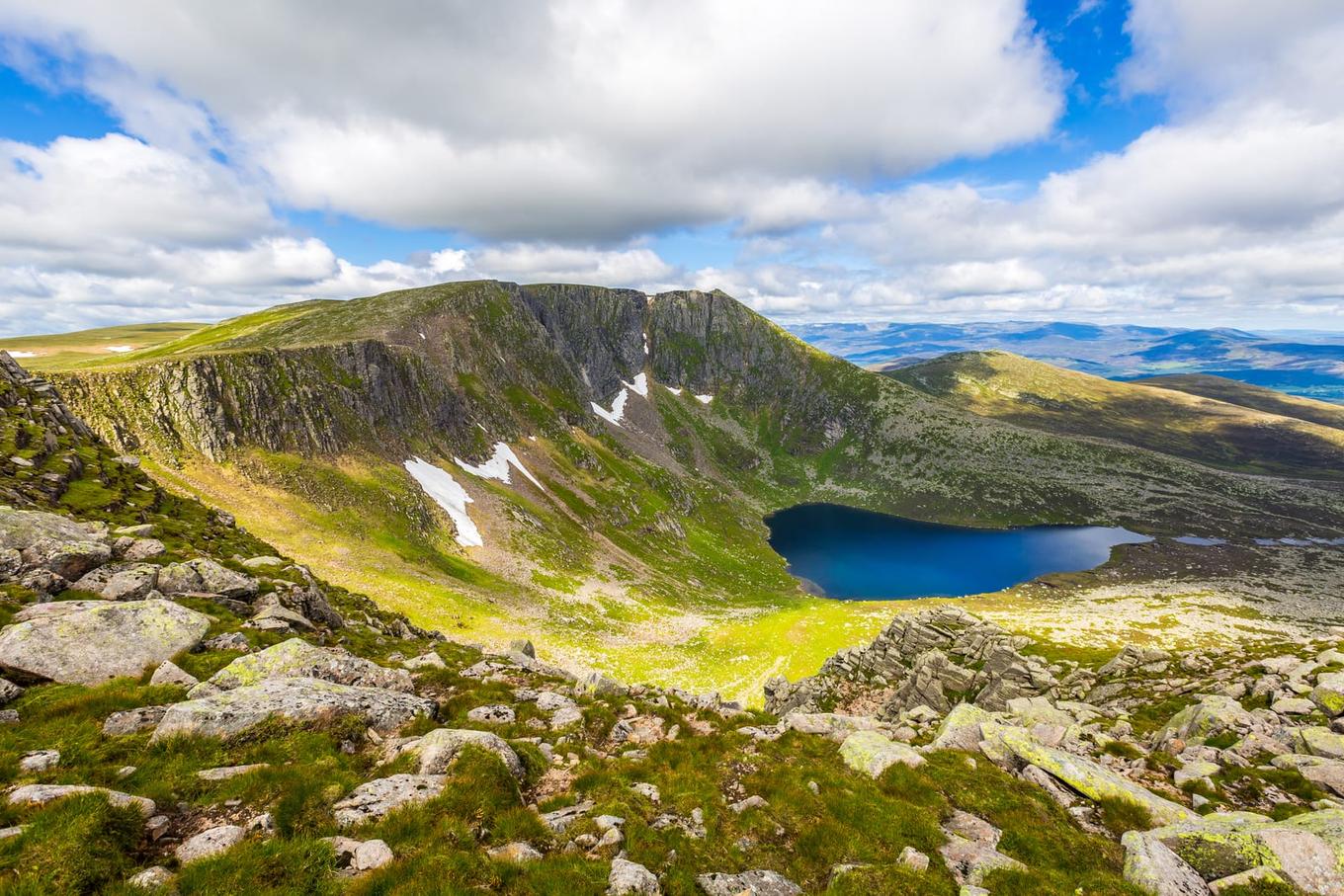
In this photo of Lochnagar, patches of snow are still lying under the cliffs while the corrie below is green. A forecast for the glen tells you little about the summit, so check both services the day before and again in the morning.
How long does it take to climb all the Munros?
Usually years, sometimes decades. The SMC's records show both ends. Jamie Aarons finished her third round in 2023 in 31 days, 10 hours and 27 minutes, under her own power with no motor transport. Robert Waterston took 69 years, finishing at 80, and the SMC calls anyone who took 50 years or more a Golden Munroist. Steve Fallon has registered 16 rounds.
Keeping track of your round
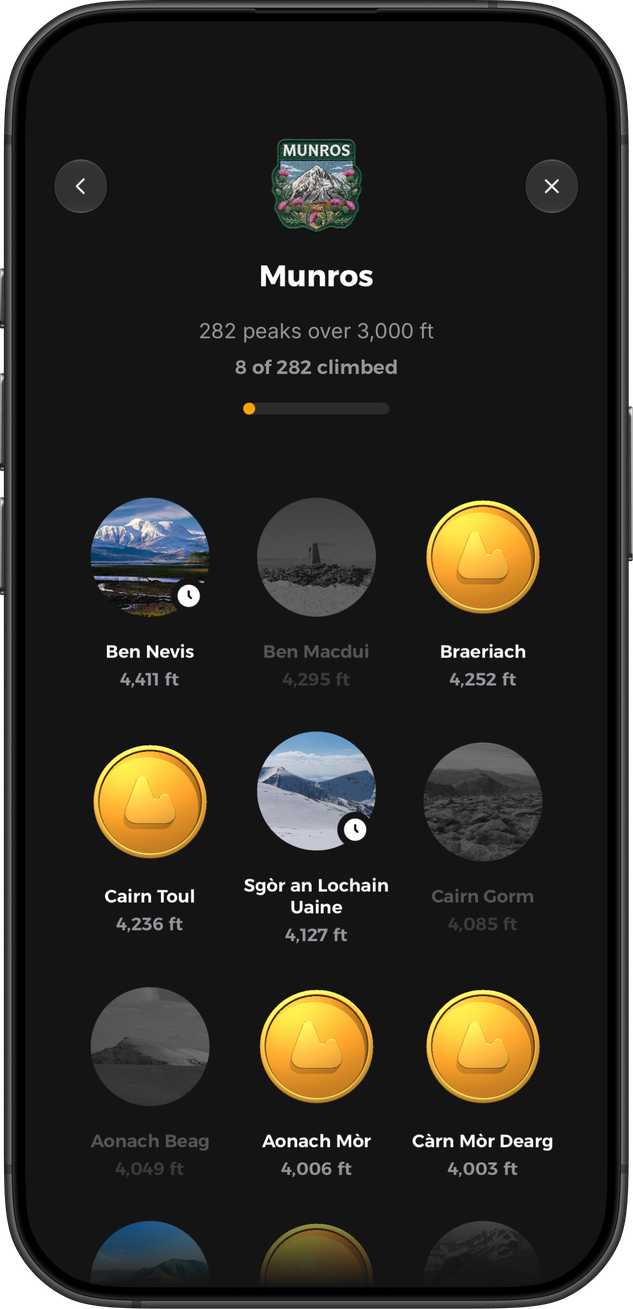
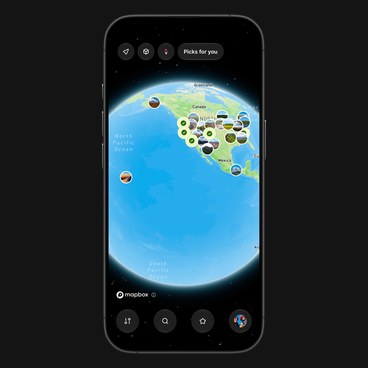
Yak is a free app for iPhone and Android, and the Munros are one of its quests: check off each hill as you climb it and see what's left. You can log past climbs with the date, notes, photos and conditions, which is the record you'll want when you write to the Clerk. Before a hill, check a 5-day forecast for the trailhead, mid-mountain and summit, with wind and freezing level, and read trip reports and hazards from other walkers.