
- …
- Yak
- Quests
- Colorado Centennials
- Pigeon Peak
13,977 ft · San Juan Mountains, Colorado
Pigeon Peak
Pigeon Peak is a 13,977 ft peak in the San Juan Mountains, Colorado. The standard route is the Northwest Couloir: 8 mi, 5,790 ft of gain, Class 3.
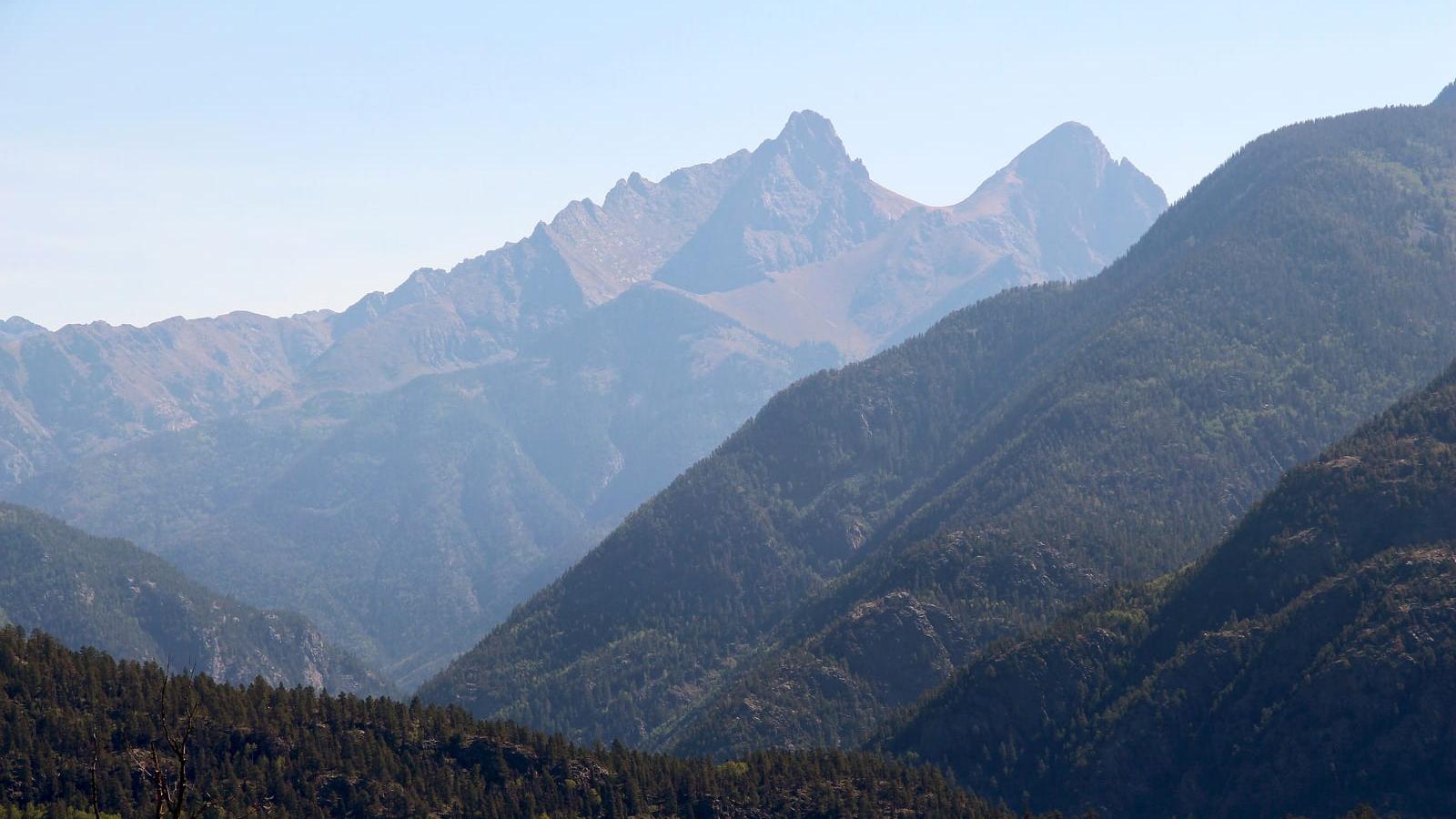
Pigeon Peak at a glance
- Elevation13,977 ft4,260 m
- RouteNorthwest CouloirClass 3
- Distance8 mi5,790 ft gain
- Time2 – 3 daysVery Hard effort
- SeasonJul – Sep
- RangeSan Juan MountainsColorado
Climbing the Northwest Couloir
Ride the Durango and Silverton Narrow Gauge Railroad to the Needleton stop, cross the Animas River, and follow the unmaintained route up steep, overgrown slopes into Northwest Pigeon Basin. From camp, climb the Northwest Couloir and upper face on Class 3 rock with loose sections and real exposure. The approach is brutally steep and route-finding is demanding. Plan two to three days and book train seats well ahead, since summer runs sell out. Turret Peak pairs easily from the same basin. Helmets recommended.
Gear and hazards
What to bring
 Backpack (55–75 L)
 Hiking Boots
 Water
 Offline Maps
 Headlamp
 Satellite Communicator
 Whistle
 Sunglasses
 Sunscreen
 Sun Hat
 Midlayer
 Insulated Jacket
 Hardshell Jacket
 Warm Hat
 Buff
 Midweight Gloves
 Trekking Poles
 GPS Device
 Power Bank
 Water Filter
 First-Aid Kit
 Emergency Bivy
 Helmet
What to watch for
- Steep exposure
- Loose rock
- Route-finding difficulty
- Remote location
- Complex logistics
Quests with Pigeon Peak
 Colorado Centennials
 Colorado 13ers
Peaks near Pigeon Peak


Frequently asked questions
How tall is Pigeon Peak?
Pigeon Peak is 13,977 feet (4,260 m) tall. It is in the San Juan Mountains, Colorado.
How does Pigeon Peak rank among the Colorado Centennials?
At 13,977 feet, Pigeon Peak is the 57th highest of the 100 Colorado Centennials. The highest is Mount Elbert.
How hard is it to climb Pigeon Peak?
The Northwest Couloir is Class 3, which means scrambling, where you use your hands to climb and a fall could be serious. Yak rates the overall effort very hard: 8 miles with 5,790 feet of elevation gain.
How many days does it take to climb Pigeon Peak?
Most climbers plan 2 – 3 days for the Northwest Couloir, with at least one night on the mountain.
Is Pigeon Peak dangerous to climb?
It has real risks: exposed sections where a fall would be serious, rockfall from loose rock and tricky route-finding. Go with an experienced partner, wear a helmet, test holds before you trust them and turn back if the rock is wet or icy.
Do you need a helmet for Pigeon Peak?
It is a good idea. Loose rock and rockfall are common on the Northwest Couloir, so a helmet is on the gear list.
Do you need to acclimatize to climb Pigeon Peak?
Most people feel the altitude above 8,000 feet, and Pigeon Peak reaches 13,977 feet. Spend a night or two at elevation first, drink plenty of water and turn back if a headache, nausea or dizziness gets worse.
When is the best time to climb Pigeon Peak?
The usual climbing window is July to September. Outside it, expect snow, storms or closed access, and check the summit forecast before you go.
Climb Pigeon Peak with Yak
Plan your route on a topo map, check the summit forecast, then log your climb and see what is left on your list