The Catskill 3500 Club: peaks, winter rules and how to register
The list used to be 35 peaks. It's 33 now, plus four of them again in winter. Here's what counts, what the trailless peaks ask of you and how to send in your tally
To join the Catskill 3500 Club, you climb and descend the 33 peaks on the club's list, then climb four of them again in winter: Slide, Blackhead, Balsam and Panther. That's 37 climbs in all. When you're done, you send the club a tally sheet of your dates and notes, pay the annual dues if you haven't already, and you're a member.
The club was formed in 1962, when a group of Mid-Hudson hikers decided the Catskill peaks over 3,500 feet deserved a list of their own. The winter requirement was there from the start, and it's still what sets this list apart from most others in the Northeast. You'll also find people searching for the "Catskill 35." That was the count for three decades, until two peaks closed to the public in 2021.
- Peaks33 (35 until 2021)
- Winter peaks4, climbed again
- Winter datesDec 21 – Mar 21
- HighestSlide Mountain, 4,185 ft
- Canister peaks14 trailless summits
- Dues (2026)$20 a year, $15 reduced
What are the Catskill 3500 peaks?
They're the 33 Catskill summits at or above 3,500 feet that the club counts as separate mountains. When the list was drawn up, a peak needed a 250-foot drop from its neighbors or a half mile of distance to count on its own, a rule borrowed from the Adirondack 46ers and scaled down.
Here's the list, highest first, at the elevations on Yak's mountain pages (a few differ slightly from the club's figures):
- 4,000 feet and up: Slide 4,185 ft and Hunter 4,031 ft
- 3,800 to 3,999: Black Dome, Thomas Cole, Blackhead, West Kill, Cornell, Plateau, Table and Peekamoose
- 3,700 to 3,799: Sugarloaf, Wittenberg, Southwest Hunter, Balsam Lake, Panther and Big Indian
- 3,600 to 3,699: Lone, Friday, Rusk, Kaaterskill High Peak, Twin, Fir, Balsam, Balsam Cap and North Dome
- Under 3,600: Eagle, Indian Head, Sherrill, Vly, Windham High Peak, Bearpen, Halcott and Rocky
Rocky is the odd one. It was once measured at 3,508 feet, and newer surveys put it at 3,487. The club decided that didn't disqualify it, so the list's shortest peak is technically below the number in the club's name. The club also calls Rocky the most inaccessible of the 33.
Most of the list sits inside the Catskill Park. Bearpen and Vly are the exceptions, just west of the park line in Bearpen Mountain State Forest. The full list with maps is on the club's peaks page and on our Catskill 3500 quest.
Why is it 33 peaks and not 35?
Because Graham and Doubletop, two of the original 35, are on private land and closed to public access on January 13, 2021. For about two months the club substituted South Doubletop and Millbrook Ridge. On March 22, 2021, it dropped the substitutes and cut the list to 33.
The 35 itself wasn't original either. The founders counted 34 peaks in 1962, and Southwest Hunter was added in 1990. If you see older guides, tally sheets or patches that say 35, that's why.
Which four peaks do you have to climb in winter?
Slide, Blackhead, Balsam and Panther. Each one has to be climbed twice: once in any season as part of your 33, and once more in winter. Both climbs can be in winter if you like.
The club's bylaws define winter as December 21 through March 21, inclusive, whatever date the solstice and equinox actually fall on that year. A climb on December 20 doesn't count as winter, even in a foot of snow, and one on March 21 does, even on bare ground.
None of the four is a technical climb, but winter changes them:
- Slide, 4,185 ft. The highest of the list, on the Wittenberg-Cornell-Slide Trail. The summit is wooded, with views from ledges near the top.
- Blackhead, 3,941 ft. The club says the climb from the east is one of the few places in the Catskills that usually needs crampons in winter, often past the official end of the season.
- Balsam, 3,609 ft. On the Pine Hill-West Branch Trail, with the true summit just off the trail.
- Panther, 3,726 ft. Reached on the Giant Ledge-Panther-Fox Hollow Trail, with views from a small ledge at the top.
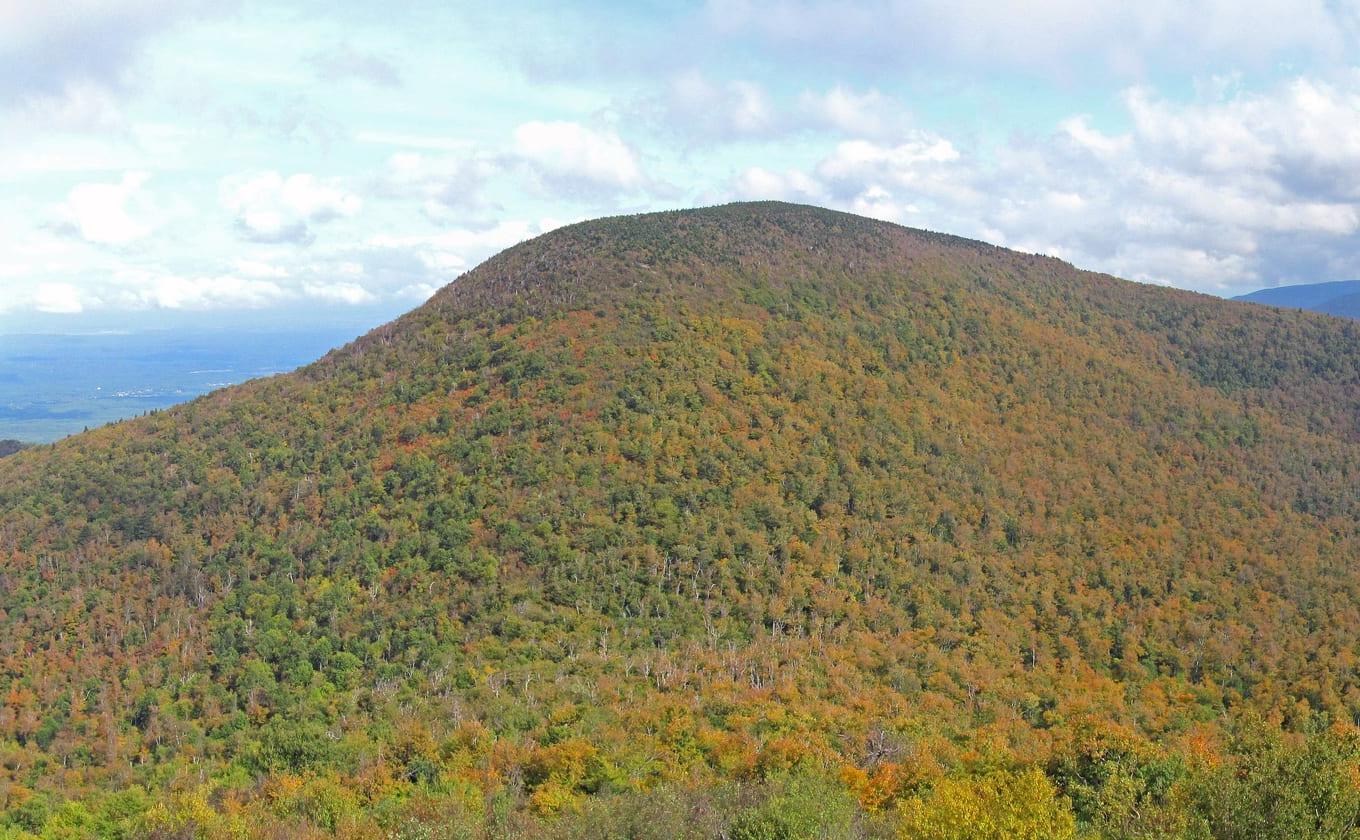
The club suggests carrying snowshoes whenever the mountains might hold about eight inches of snow or more, even if the trailhead is bare, and microspikes or crampons for packed snow and ice. Its Hiker 101 page covers layering, food and water in the cold, and where to park when the roads are plowed.
Two other peaks have a winter reputation in the club's own descriptions: Sugarloaf for thick ice on its steep sections, and the Cornell Crack, a scramble just east of Cornell's summit that can be treacherous in winter conditions.
What are the trailless peaks like?
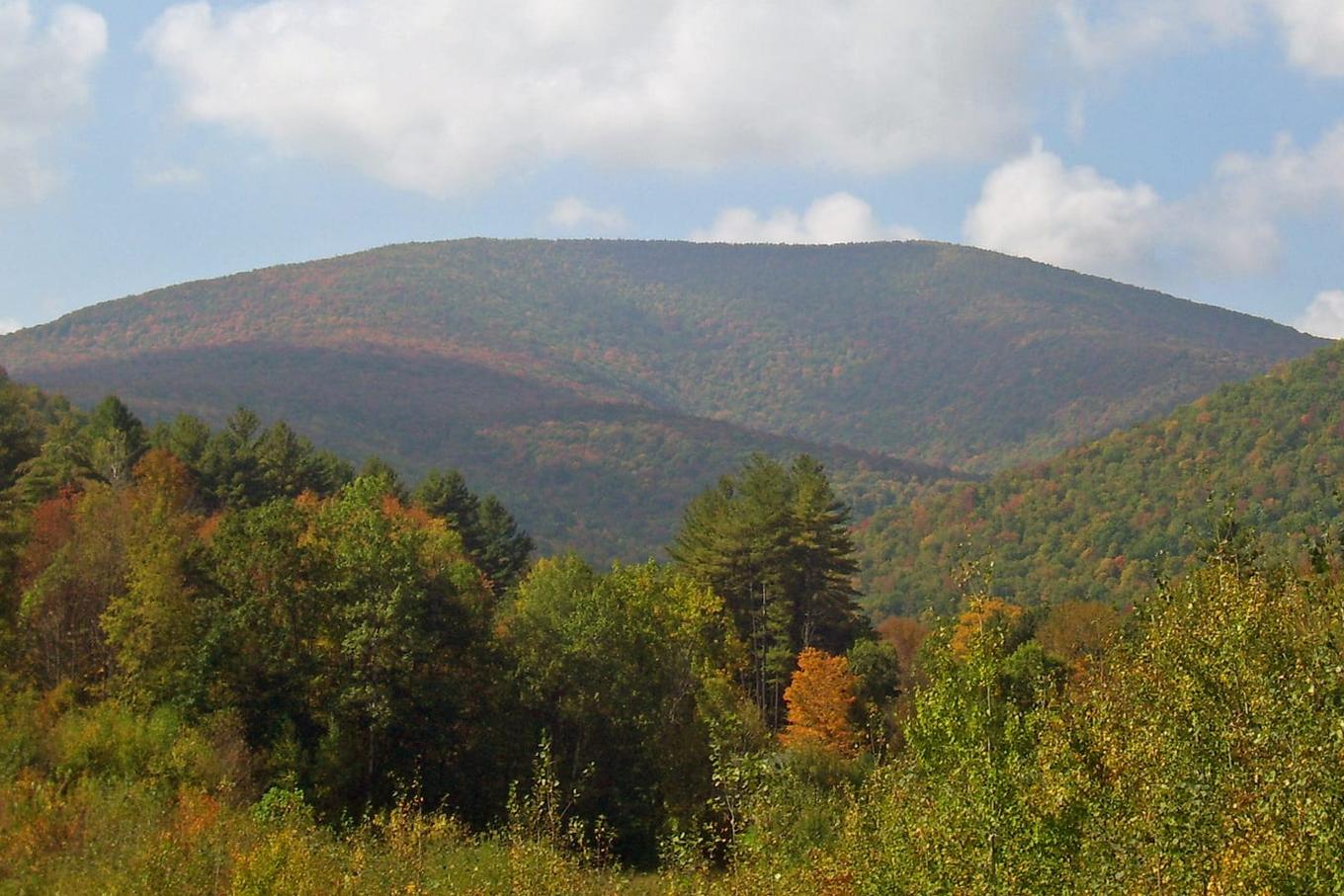
Fourteen peaks on the list have no marked trail to the summit, and the club asks you to find and sign the register on each one: Southwest Hunter, Lone, Big Indian, Friday, Rusk, Kaaterskill High Peak, Fir, Balsam Cap, North Dome, Eagle, Sherrill, Vly, Halcott and Rocky.
The registers live in bright orange canisters fixed to summit trees. Signing in leaves a record of your climb, can help searchers if something goes wrong, and gives the DEC numbers it uses to argue for Forest Preserve funding. The first canisters, in the 1960s, were coffee cans, until porcupines started eating them.
How trailless they feel varies a lot:
- Herd paths. Eagle's canister is just off the Pine Hill-West Branch Trail on a short, easy path. Vly has a well-used herd path along property boundary markers from the col with Bearpen.
- Short bushwhacks. Big Indian is about a quarter mile off the same trail.
- Real route-finding. Rocky and Balsam Cap push through dense balsam fir, and Lone's summit is birch and other hardwoods instead. The club calls Rocky the most inaccessible of all.
Southwest Hunter is a special case. It's officially off-trail, but the usual approach follows an old rail bed where a path was illegally cut in 2010. Bearpen has no canister: a snowmobile trail runs to the top, though there's no foot trail.
Navigation on the trailless peaks
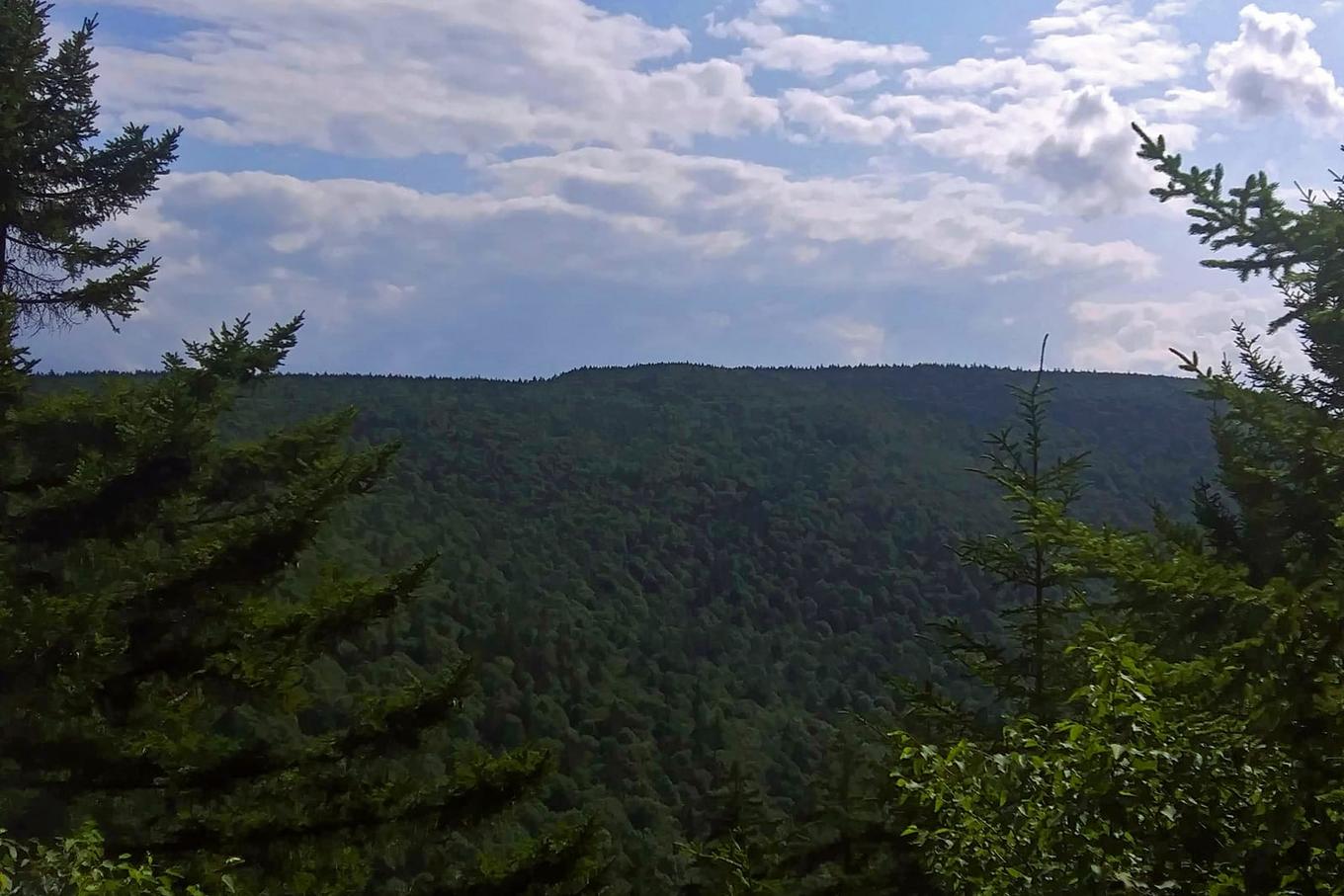
Bring a map and compass and know how to use them. The club's stewardship page is direct about why: batteries die, GPS loses its fix, and devices fail. Steady map-and-compass travel also keeps hikers from wearing new herd paths into fragile summit forest.
The club also points to private land as a navigation problem. Several approaches (Friday, North Dome, Vly) pass close to posted property, and it's on you to know where the state land ends. Its Hiker 101 page links a guide to hiking around private property.
How do you register for the Catskill 3500 Club?
You become a member when you submit a completed tally sheet of all 37 climbs. The club's join page lists three ways to send it:
- Digital tally sheet. Log hikes as you go on the club's hike site, and it fills in the form for you. You can apply straight from it.
- Fillable PDF. Download it, fill it in and upload it on the join page, then pay dues on the dues page.
- By mail. Send the tally sheet and a check to the Membership Chair at Catskill 3500 Club, P.O. Box 294, West Hurley, NY 12491.
Earlier climbs count, even ones from before you knew the club existed. If you can't remember the exact date of an old hike, the club's digital tally sheet page says your best guess is fine. The club also asks for real notes: the weather, trail conditions, who you hiked with, which trailheads you used. The membership team uses them to write each new member a personal welcome letter.
How much does it cost?
For 2026, annual dues are $20, or $15 for students and seniors 65 and older. A lifetime membership is $250, and you can add a child 12 or under for $5 a year. Prices are on the dues page.
If you're still working on the list, you can sign up as an aspirant for the same $20 a year. That gets you the club's quarterly newsletter, The Catskill Canister, and access to club-led hikes. If you're a paid-up aspirant when you finish, you don't pay dues again with your application.
What do you get?
A patch and a membership certificate, along with that welcome letter. Members are assigned a hiker number, listed in the Canister and on the club's list of members, and recognized at the annual dinner.
Is there a winter patch?
Yes. The winter patch is for climbing all 33 peaks between December 21 and March 21. You have to qualify for the regular patch first or at the same time, and the four winter peaks still have to be climbed twice. There's no winter-only route to membership. There's no separate winter tally sheet either: on the club's online form you pick "winter" as the membership type, and the digital tally sheet tracks winter climbs automatically.
The patches page lists the others:
- Life Member patch, for members who take the lifetime membership.
- Club Service Award, for 7 points of service such as trail maintenance, trailhead stewarding or the Route 214 litter cleanup.
- Trailhead Steward patch, for stewarding at the Slide Mountain or Woodland Valley trailhead twice in a year after training, with a rocker for each year you keep it up.
- Hike Leader patch, for leading six club hikes, including one in winter and one bushwhack, plus a trail maintenance outing.
What are the rules on the trails?
The DEC sets them, and the club asks members and non-members alike to follow them. The main ones for the Catskill Forest Preserve, from the DEC's state land rules and Catskill backcountry page:
- No camping above 3,500 feet except in an emergency or from December 21 to March 21.
- No fires above 3,500 feet, at any time of year, except in an emergency.
- Camp at least 150 feet from any road, trail or water, unless a "Camp Here" marker says otherwise.
- Camping groups of 10 or more, or stays of more than three nights in one spot, need a permit from a Forest Ranger.
On top of that, the club asks hikers to follow Leave No Trace, take nothing from the forest, build no cairns and blaze or cut nothing on the trailless peaks, and bury human waste 150 feet off the trail where there's no privy. In hunting season, it suggests wearing blaze orange or pink. For emergencies, call 911 or the DEC Forest Rangers at 833-697-7264.
Keeping track of the 37 climbs
We built Yak for lists like this one. The free app for iPhone and Android has a Catskill 3500 quest that shows which of the 33 peaks you've climbed and which are left. Log each climb with the date, notes, photos and conditions as you go, and you'll have everything the tally sheet asks for when you finish. You can also check a 5-day forecast for the trailhead, mid-mountain and summit before a winter attempt.

Dues, rules and patch requirements here are from the club's and the DEC's pages in November 2026, so check them before you send in your tally.