When is 14er season in Colorado? A month-by-month guide
The short answer is mid-July to mid-September. The longer answer depends on snowmelt, the monsoon, road gates and how comfortable you are on snow
For most standard routes, 14er season in Colorado runs from about mid-July to early or mid-September. That's when the trails are usually clear of snow, the trailhead roads are open and the days are still long. June and late September are the shoulder months: easy on some peaks, snowy or muddy on others.
Snow can fall on a 14er in any month, though. The Colorado Climate Center notes that snow and soft hail are possible from mountain storms even in July and August. So "season" really means the stretch when the odds are on your side. Here's how those odds shift through the year on the Colorado 14ers.
- Best windowMid-July to mid-Sept
- ShoulderJune, late September
- Storm peakLate July – August
- AvalancheCAIC, Nov 1 – May 31
- Quandary passJun 13 – Sep 13, 2026
When does 14er season start?
For most hikers it starts in early to mid-July, once the snow has melted off the standard routes. The exact week moves every year with the snowpack.
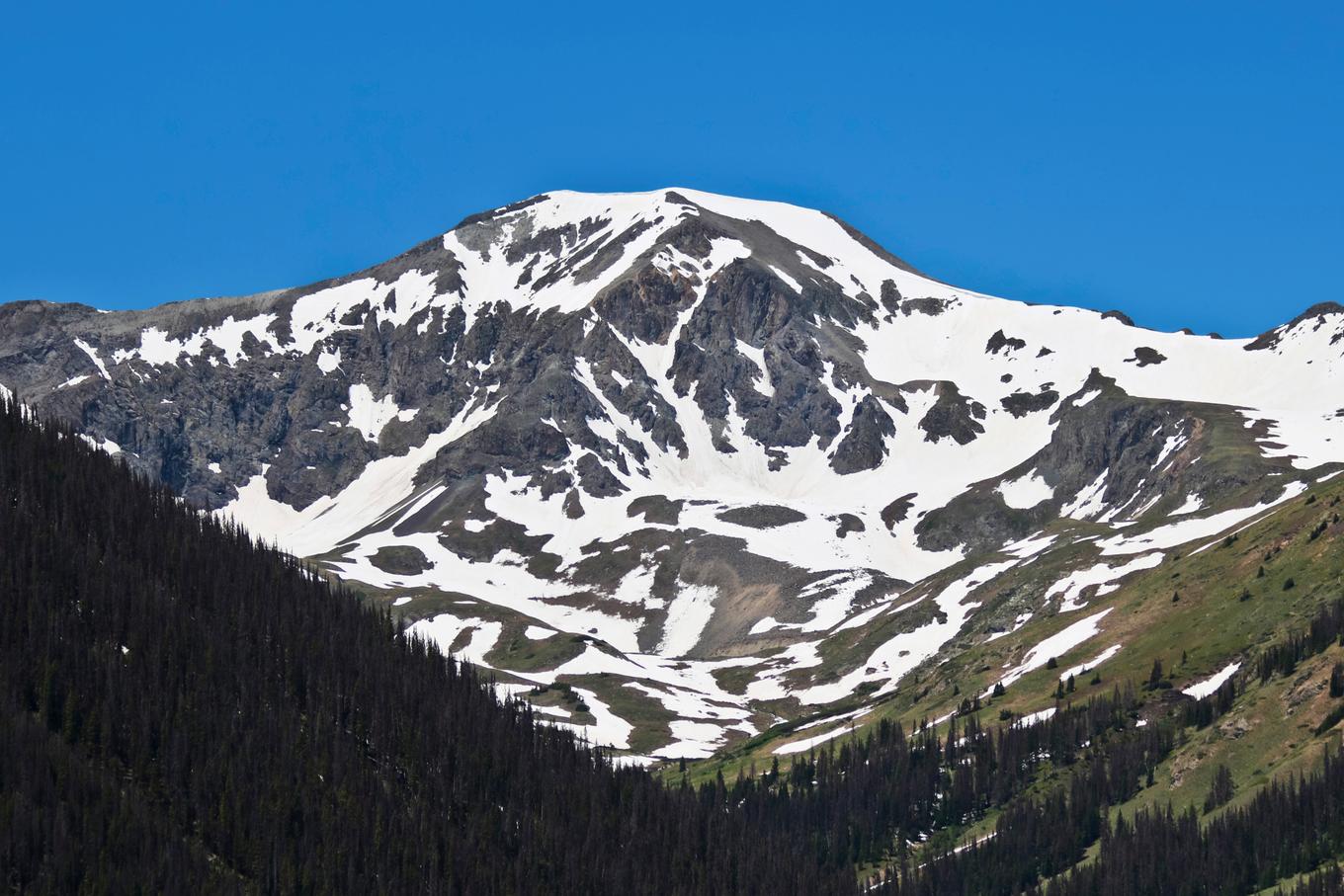
According to the Colorado Climate Center, most mountain snow melts in April, May and early June. North-facing slopes and gullies above treeline hold on longer, which is why a route can look dry from the highway and still have a steep snowfield near the top.
Roads keep their own calendar. Guanella Pass, the drive to Mount Bierstadt, usually reopens around Memorial Day weekend. In 2026 a thin snowpack let Clear Creek County open it on April 16, more than a month early.
Can you hike 14ers in June?
Yes, with the right expectations. Plan on snowfields, mud and some postholing, especially early in the month and on north-facing routes.
The Colorado Fourteeners Initiative, which builds and maintains many 14er trails, asks hikers to walk through mud and snow on the trail rather than stepping around it onto the tundra. CFI warns that a few steps on the young plants beside the trail can kill off whole plant communities and widen the trail. Waterproof boots make that a lot easier. Steeper snow calls for traction, and an ice axe if you know how to use one.
June has one thing going for it: the Colorado Climate Center notes it's often a much drier month in the high country than late summer.
When is thunderstorm season on the 14ers?
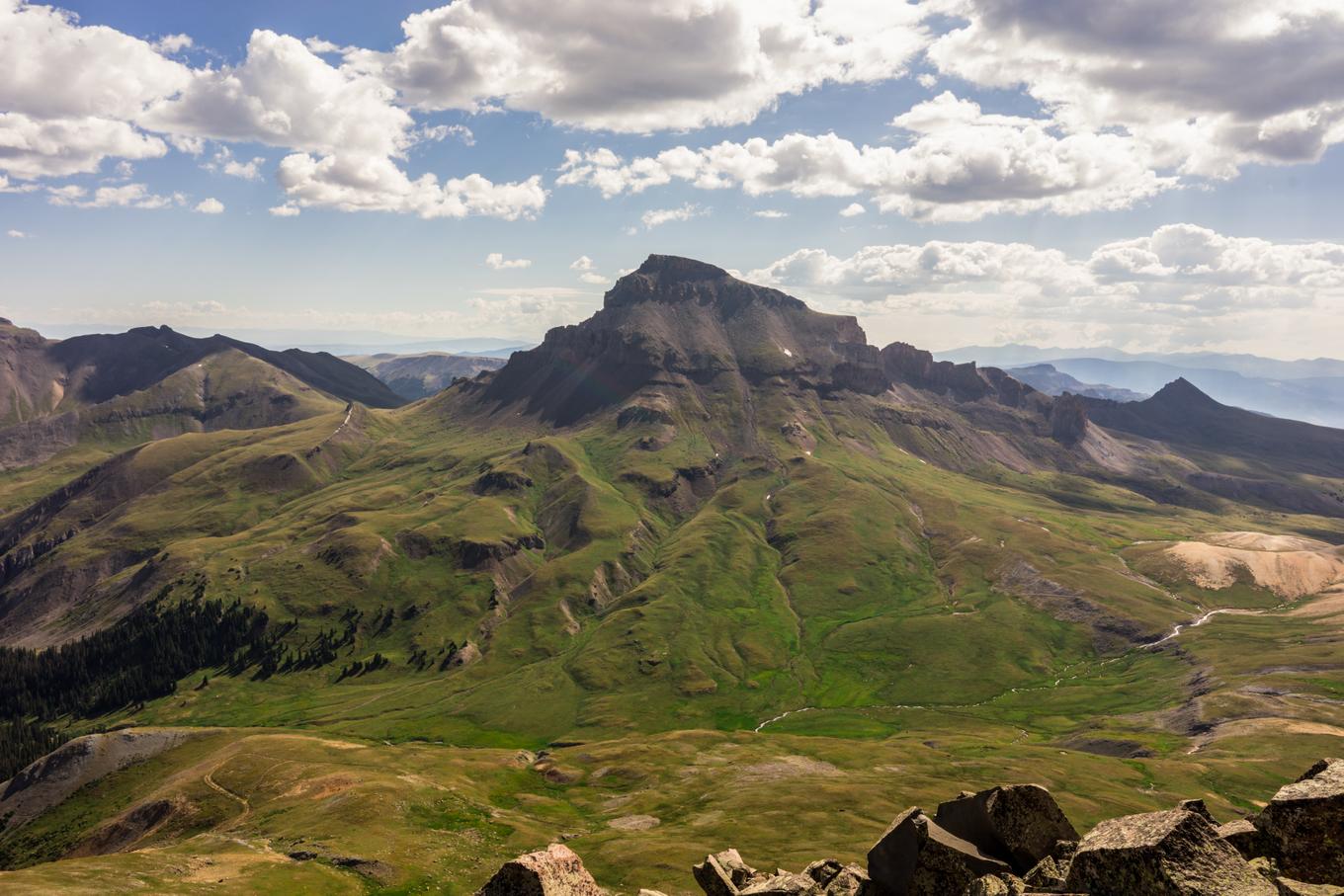
July and August. The National Weather Service in Pueblo says the North American monsoon typically ramps up in Colorado in July and persists through August, bringing slow-moving storms with a lot of lightning.
The Colorado Climate Center singles out the last half of July and much of August as especially prone to mountain thunderstorms. In southern and western Colorado, monsoon moisture often hangs on into September.
The time of day matters more than the month. The NWS office in Boulder puts it plainly: thunderstorms typically develop in the Colorado mountains after 11 a.m., so plan to be coming down by late morning. The Colorado Fourteeners Initiative's version is to be back at treeline by noon. Storms don't always keep to the schedule, so watch for darkening cloud bases and fast-growing cumulus clouds, which NWS Pueblo lists as the cue to head down.
NWS Pueblo also keeps a page of point forecasts for each Colorado 14er, which is worth checking the night before.
Do you need a reservation to hike a 14er in summer?
For most 14ers, no. A couple of popular ones have summer-only systems that change how you plan.
Quandary Peak requires a paid parking reservation at its trailhead in summer. In 2026 the window ran June 13 to September 13, with full-day parking at $30 Monday through Thursday and $55 Friday through Sunday and holidays, or a $7 round-trip shuttle from Breckenridge. Outside those dates, parking is free and first-come, first-served. Bookings open two weeks ahead of your hike date. Check hikequandary.com for the 2027 dates and prices before you plan.
The road up Mount Blue Sky needs a timed ticket from Recreation.gov for cars and motorcycles. Hikers and cyclists coming in below the welcome station don't need one, and federal passes like America the Beautiful are no longer accepted. In 2026 the upper road above Summit Lake closed for the season on September 8, according to the Forest Service, and Recreation.gov says the whole road closed to vehicles on October 5.
Can you hike 14ers in September?
Yes, and early September is still inside the main window. As the monsoon fades, afternoon storms usually become less frequent, though they don't stop entirely.
The tradeoffs are colder mornings, shorter days and the first real snow. The Forest Service describes the alpine tundra turning red, yellow and brown starting in August, colors that hold through the first snowstorms of mid-September. After an early storm, check recent trip reports before you assume the trail is dry again.
Some seasonal systems end in September, too. Quandary's 2026 reservations ended September 13, and the Mount Blue Sky summit road had already closed for the year.
Which 14ers are best for fall colors?
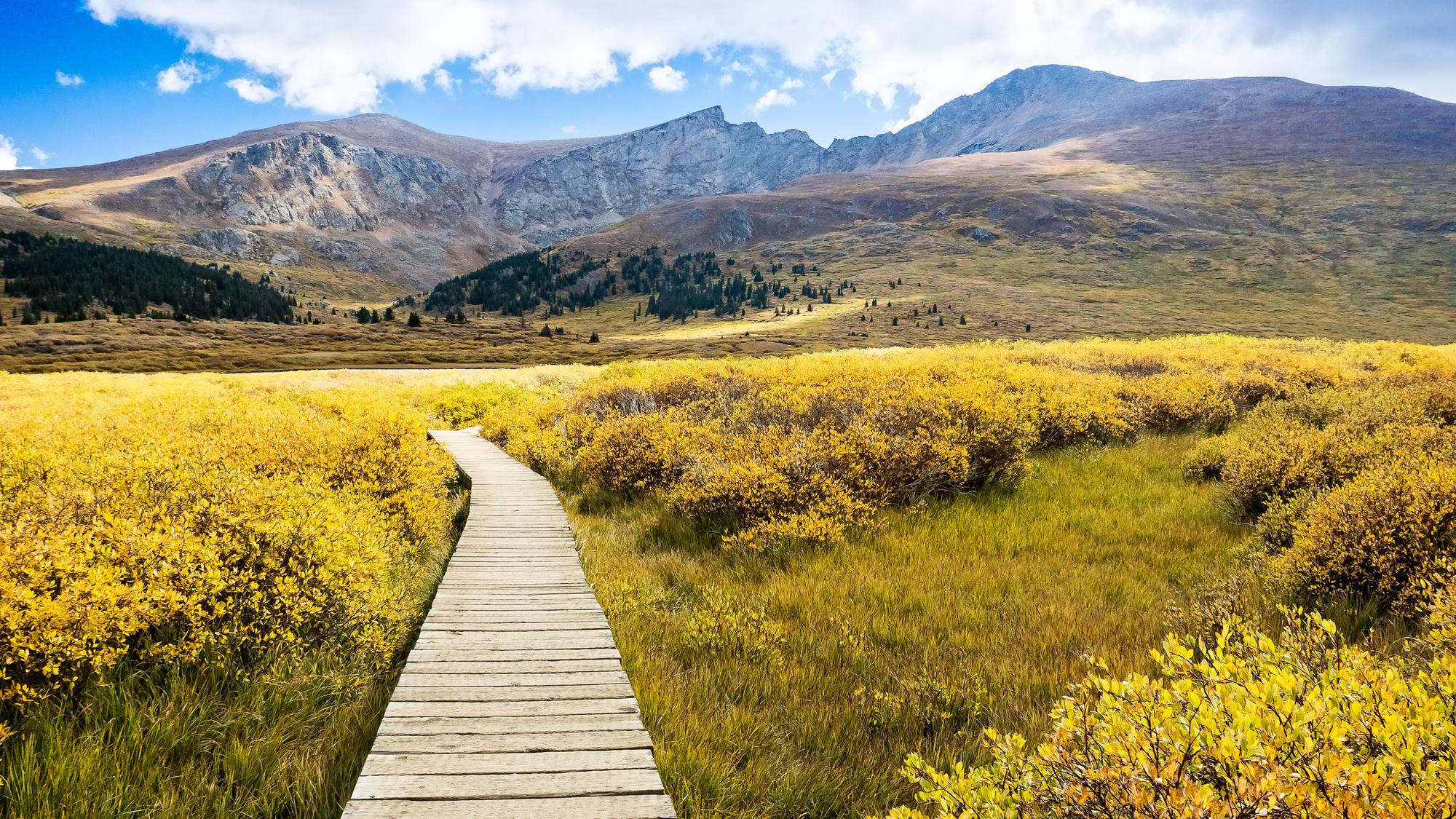
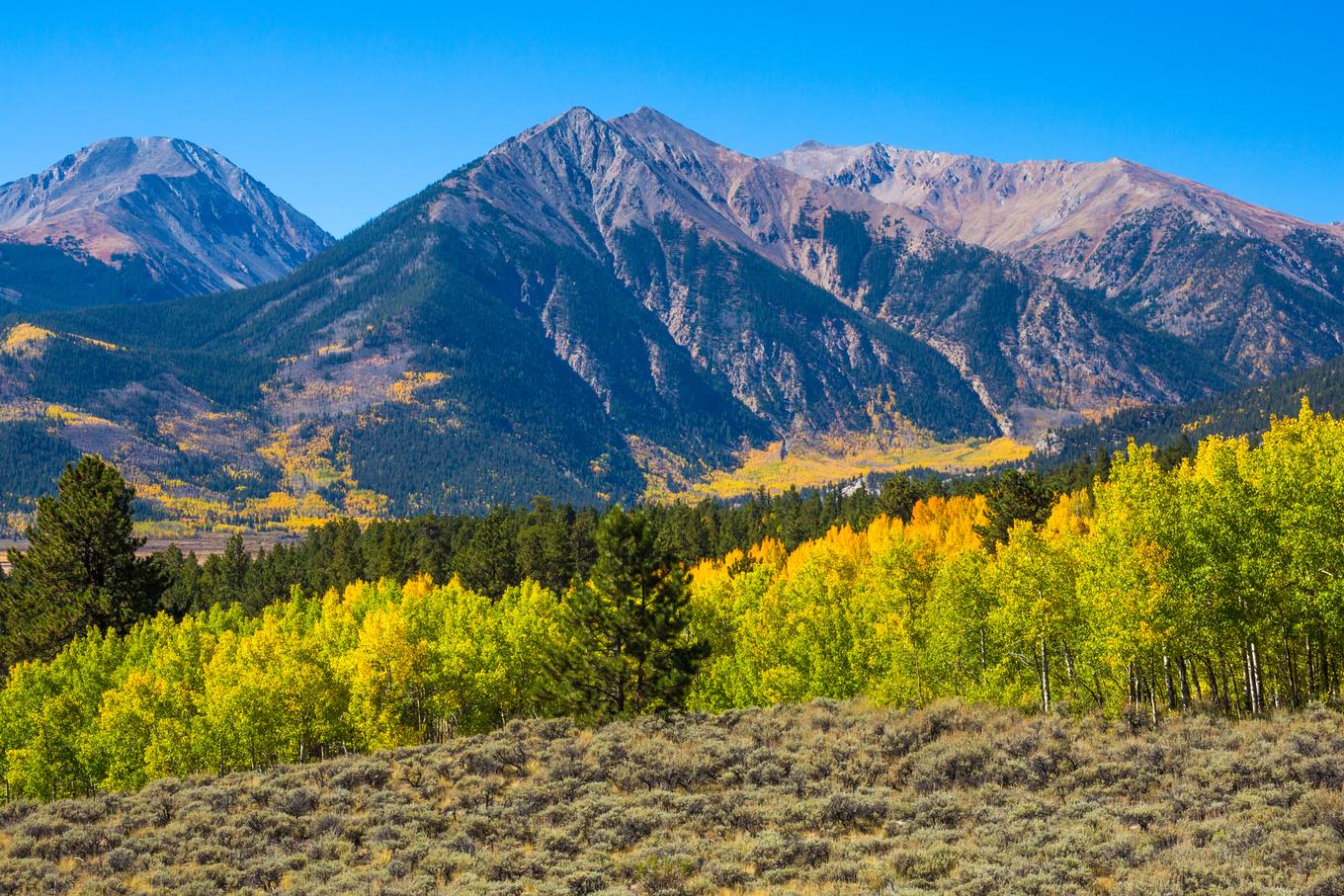
Pick a peak whose trailhead sits in aspen country, and go in the second half of September. Aspens grow well below treeline, so most of the color is on the drive and the first part of the hike.
For 2026, CDOT passed along Colorado State Forest Service estimates: early to mid-September in the northern mountains and high passes above 9,500 feet, mid to late September in the central mountains between 8,000 and 9,500 feet, and late September in the San Juans. The Forest Service names Guanella Pass, home of the Bierstadt trailhead, as one of the region's fall color drives.
That popularity has a cost. Clear Creek County says weekends on Guanella Pass draw about 2.5 times as many visitors as weekdays during leaf-peeping season, and parking in a "No Parking" zone there is an $87.50 fine. A weekday start helps on the drive and on the trail.
When do 14ers get snow?
Some snow is possible in any month, but snow that sticks around usually arrives in late September or October. By October, most 14ers have at least some snow on their routes.
In 2026 the Colorado Avalanche Information Center (CAIC) issued an early-season forecast on October 22 as a storm moved in. It warned that nearly every fall, small avalanches catch "eager snow riders, late-season hikers and hunters off guard."
Can you hike 14ers in October?
Yes, if you treat it as an early winter hike. Expect snow on the upper mountain, ice on the trail, strong wind and less daylight to work with.
Microspikes help on packed snow and ice. More important is knowing whether your route crosses avalanche terrain. The CAIC says avalanches are possible whenever there's snow on a slope steeper than about 30 degrees, and its October forecast pointed out that even small slides can carry you into rocks the thin snow hasn't covered yet.
Can you hike 14ers in the winter?
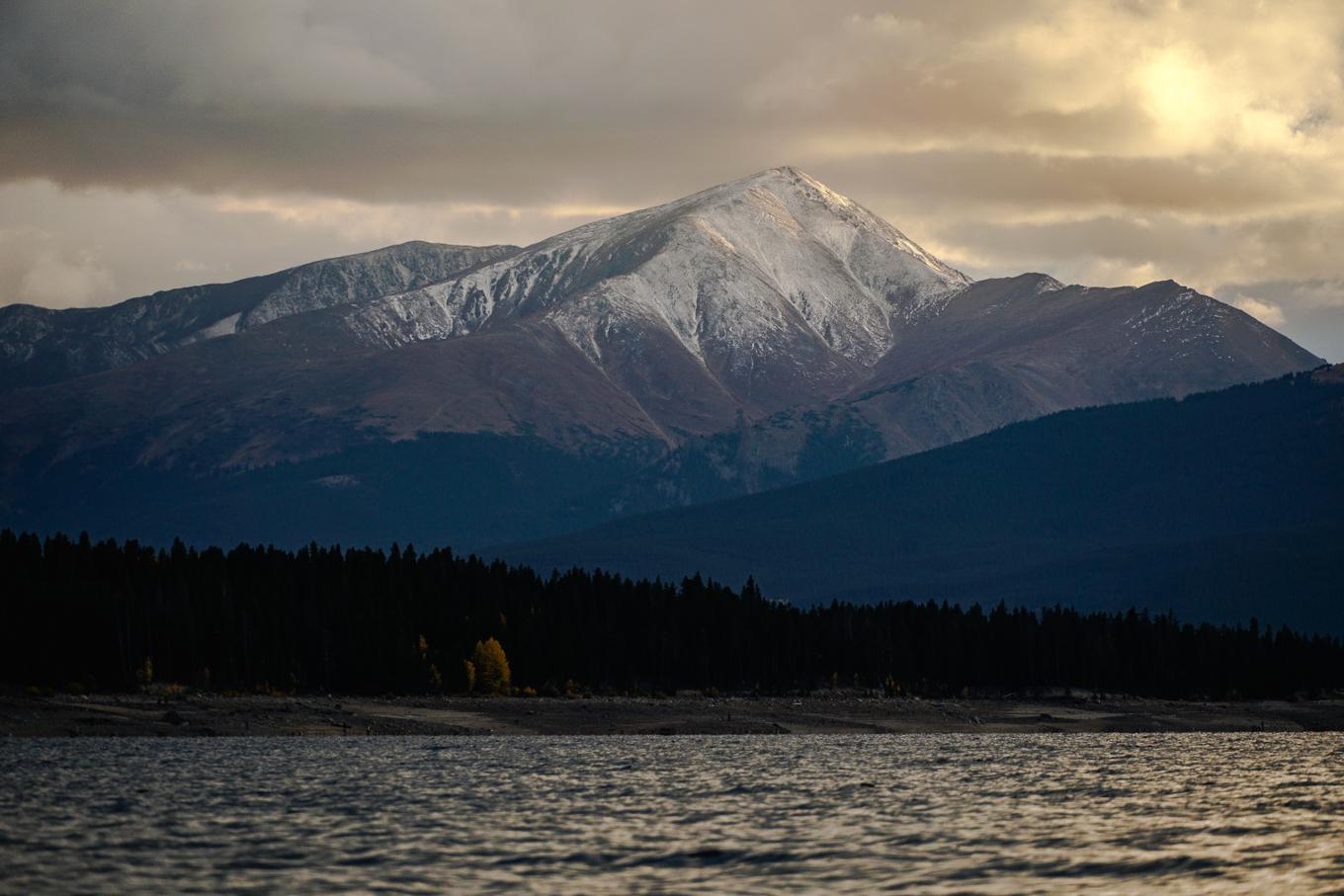
People do, but it's a different activity: deep snow, avalanche terrain, serious cold and often a longer approach because roads close.
CAIC issues daily backcountry avalanche forecasts from November 1 through May 31. Check the forecast when you plan and again the morning you go, and carry rescue gear if your route touches avalanche terrain. Snowshoes take over once the snow is deep.
Road gates add distance. Clear Creek County closes Guanella Pass after Thanksgiving at the Naylor Lake turnoff, 0.8 miles from the pass and the Bierstadt trailhead, so a winter Bierstadt hike starts with a walk up the road. Other trailhead roads close lower down in winter too, so check with the ranger district or county before you go. At Quandary, parking is free and first-come outside the summer reservation dates.
Can you hike 14ers in May?
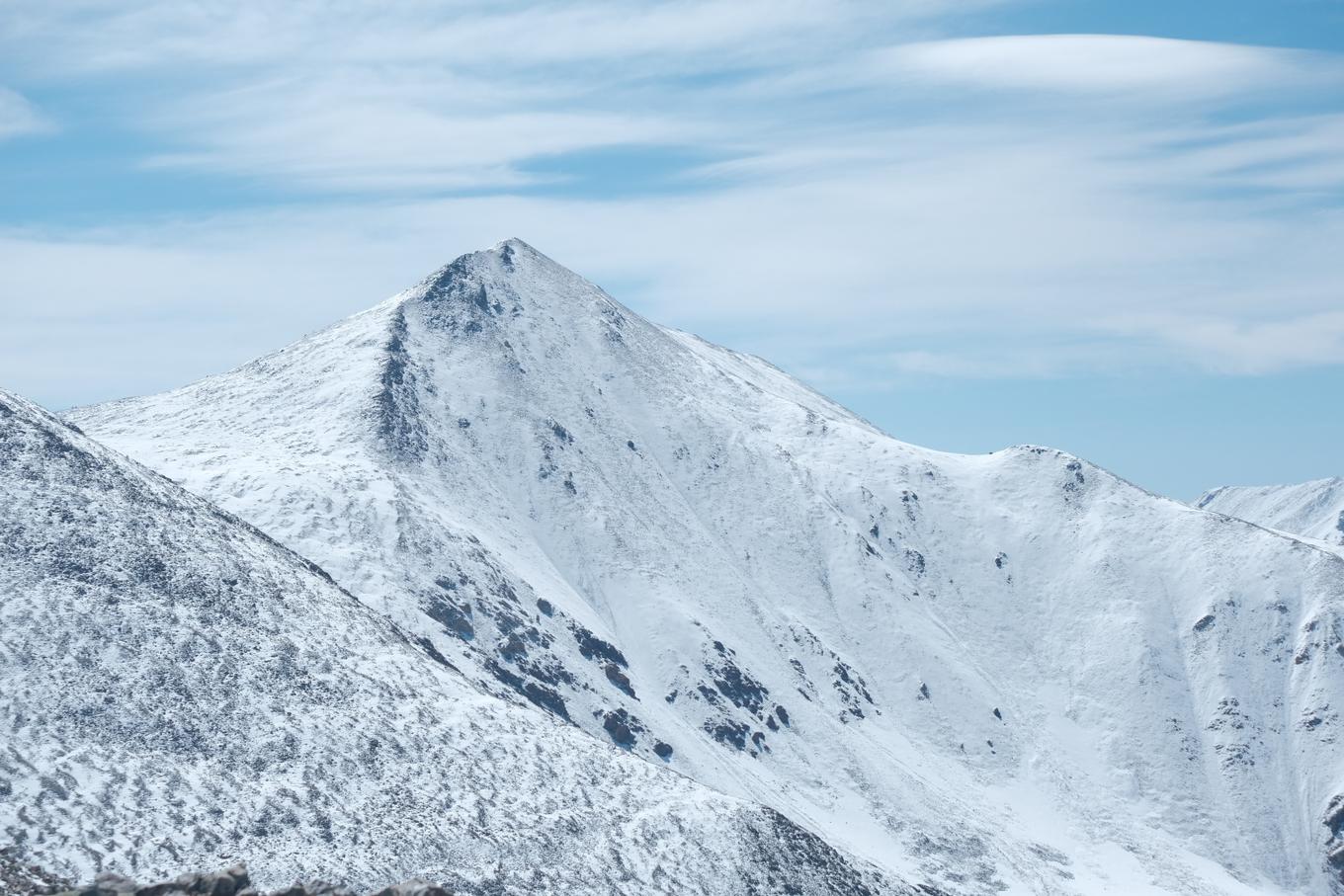
Usually only as a snow climb. In most years the high country is still in winter conditions above treeline through May.
CAIC's daily forecasts run until May 31 for a reason, and May falls right in the main snowmelt period. Guanella Pass usually doesn't reopen until around Memorial Day weekend, and 2026's mid-April opening was the exception. If you're new to snow travel, June or July is a better place to start.
Planning around the season in Yak
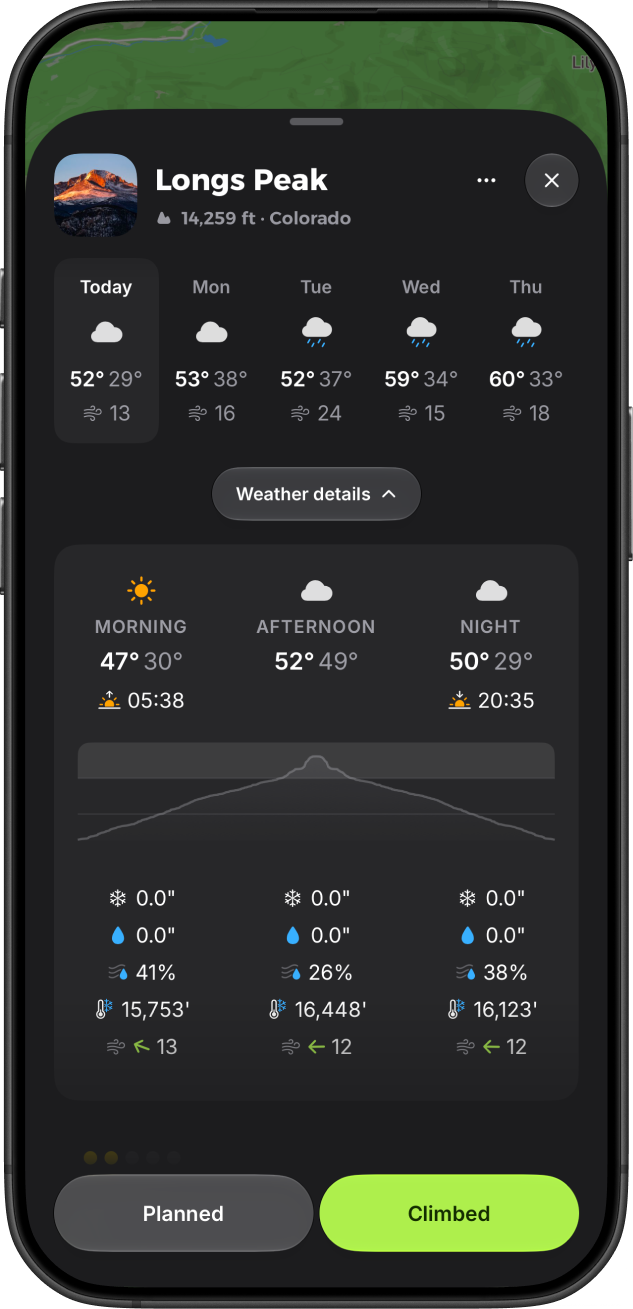
Yak is a free app for iPhone and Android, and the Colorado 14ers quest tracks which peaks you've climbed. Each peak has a 5-day summit forecast with temperature, wind and freezing level, plus trip reports and hazards from other climbers, which helps on shoulder-season days when the trailhead and the summit feel like different months. After the hike you can log the climb with the date, conditions, notes and photos.